LFP
For daily cyclingThe workhorse. Deep, frequent cycles with long calendar life and stable thermal behavior. The default choice for daily-duty storage.
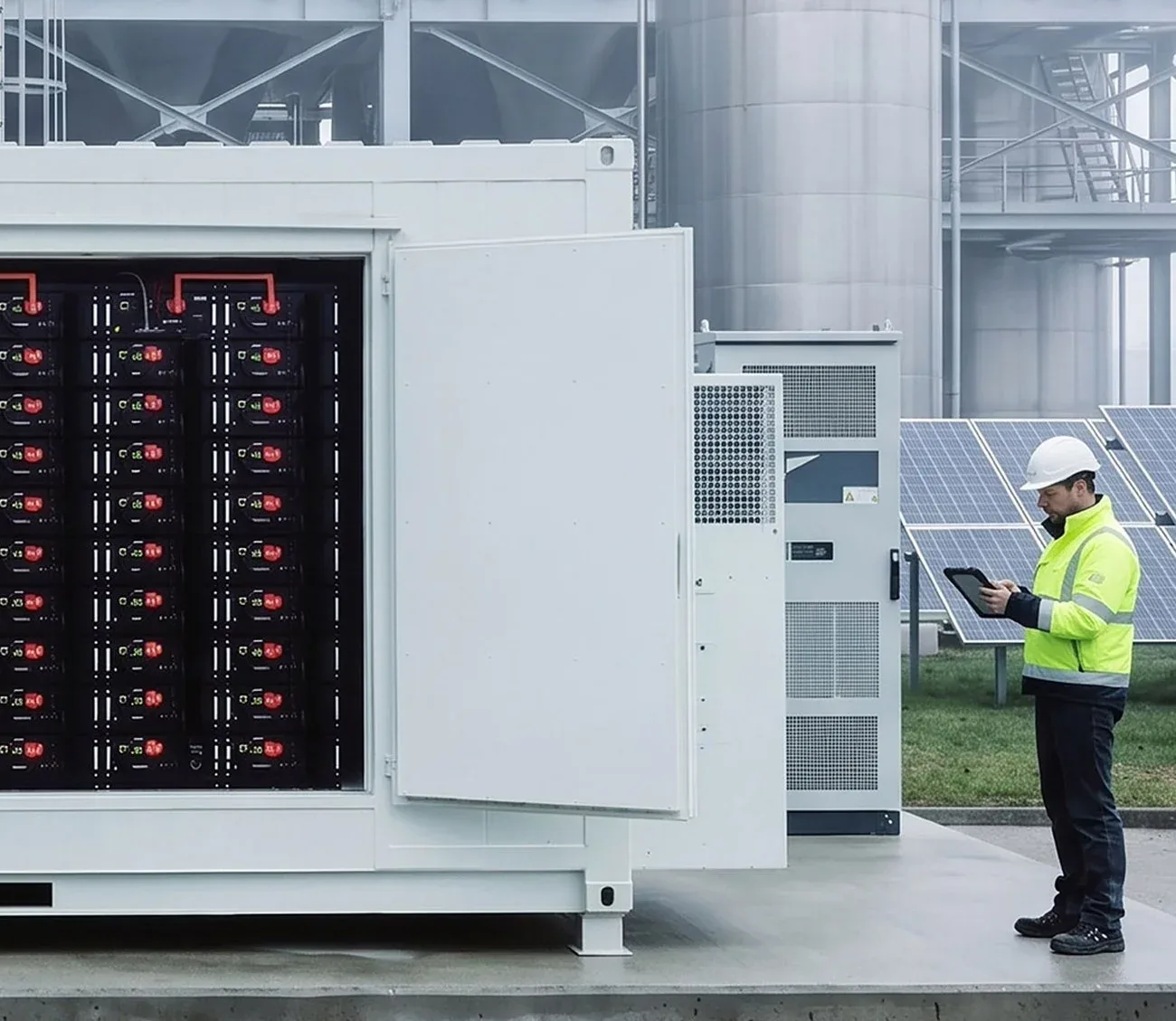
From 530 W portables to 5 MW arrays.
Hybrid battery storage and UPS systems that keep power reliable, scalable and always online, every one monitored around the clock from our Network Operations Center.
Our batteries are hybrid-native. They work with hydrogen, solar and engine generation under one control system, with instant failover, peak shaving and load balancing built in.
That is the difference between a battery vendor and a power company: we engineer the whole architecture, and we watch it around the clock.
From a power station you can carry to arrays measured in megawatts. Pick a system to see where it sits on the scale.
Modular, solar-rechargeable lithium units, from handheld power banks to robust power stations. Fuel-free and quiet, they cover home essentials, field crews and remote operations, recharged from the sun wherever you take them.
Output range across the portable family
Compact energy storage for residences and small offices, starting at 14.3 kWh of capacity and 12 kW of output, and modularly expandable well beyond 170 kWh. Optimize self-consumption day to day, and back up what matters when the grid fails, in near-silent operation.
Entry configuration, modularly expandable
Always-online double-conversion systems that protect facilities from power-quality failures and sudden grid dropouts, with seamless transition between energy sources. Configured with hydrogen fuel cells, the generator is always online too, so there is no transfer switch and no gap at all.
Hydrogen fuel cell UPS, delivered to a state-owned enterprise, 2023
Modular blocks engineered for utility and industrial applications: peak management, load balancing and advanced safety controls that optimize efficiency and support grid stability. Paired with our hydrogen generation, a battery park becomes indefinite-duration backup instead of a four-hour reserve.
Per modular block
Storage engineered across multiple chemistries for load balancing, seamless integration and the right energy density for the job. We select the chemistry to fit your duty cycle, then design, build and integrate the array ourselves.
Chemistry-fit engineering, below
A standalone battery is a countdown: when the grid drops, you run on whatever is in the cells. In our hybrid architecture the battery absorbs the step instantly, while an always-online fuel cell takes the base load and holds it for as long as fuel flows. Your outage tolerance stops being a battery size and becomes a fuel schedule.
Any battery-only vendor
Poweredon the cells
Battery and hydrogen fuel cell under one control system
Poweredas long as fuel flows
Failover protection. The battery absorbs the step the moment the grid drops.
Even with hydrogen supply interrupted, EmPower batteries alone carry full load for about half an hour.
Runtime is set by your hydrogen inventory and delivery schedule, not by cell count.
A typical standalone system holds rated load for about four hours; this comparison uses that figure. In the hybrid, the fuel cell is always online, so there is no transfer switch and no gap. The battery returns to reserve, absorbing load swings and covering refuels.
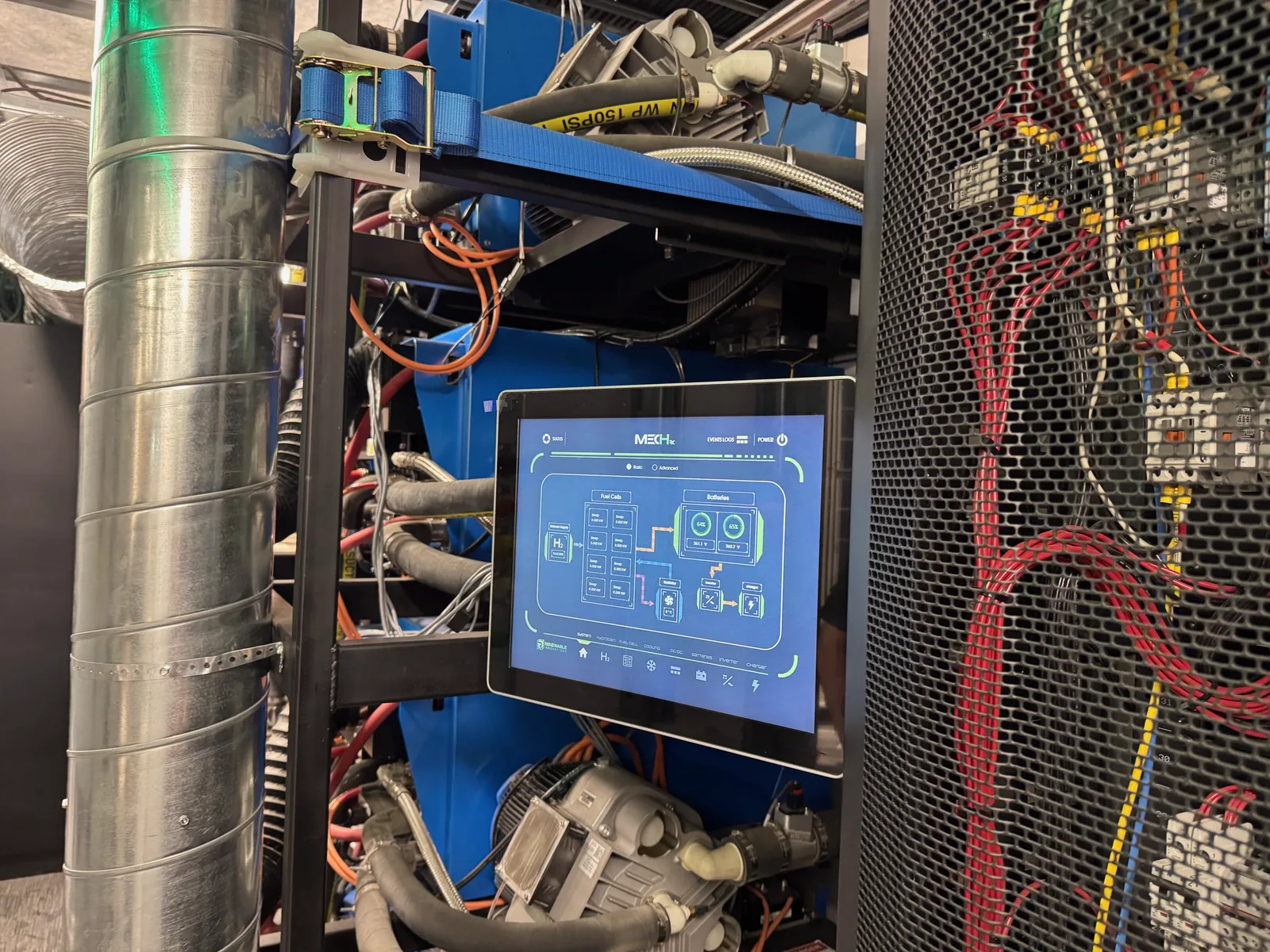
Our storage is never an island. The same controls that manage your batteries dispatch hydrogen fuel cells, solar input and engine generation: shaving peaks, balancing loads and protecting sensitive equipment as one coordinated system rather than a stack of boxes.
Every system reports home. State of charge, cycling behavior and faults stream to our Network Operations Center 24/7, watched by the people who built it.
Most vendors sell the chemistry they stock. We start from your duty cycle: how often you cycle, how deep, how hot, how tight the space. Then we engineer the array around it.
The workhorse. Deep, frequent cycles with long calendar life and stable thermal behavior. The default choice for daily-duty storage.
Exceptional cycle life and tolerance for extreme temperatures and hard fast-charge duty, where other chemistries age out early.
The most energy in the least space and weight. The fit when footprint is the binding constraint: on trailers, in tight rooms, on rooftops.
An emerging option for stationary duty: abundant materials, favorable safety characteristics and an attractive cost trajectory.
This is not reseller talk. The 180 kWh array inside the MPG delivered to the U.S. military is our own build: pack design, battery management and system integration, engineered in Utah.
Headline figures for each system. Every installation is engineered to the load, the outage tolerance and the duty cycle.
| Small-to-large scale UPS | Always-online double-conversion; hydrogen fuel cell option (no transfer switch) |
|---|---|
| Portable battery systems | 530 W – 9,500 W output range |
| Home / SOHO BESS | From 14.3 kWh / 12 kW; modularly expandable well beyond 170 kWh |
| Large-scale BESS | 5 MW / 5 MWh per modular block |
| Custom battery arrays | LFP · LTO · NMC · Sodium |
| Monitoring | 24/7 from the RI Network Operations Center |
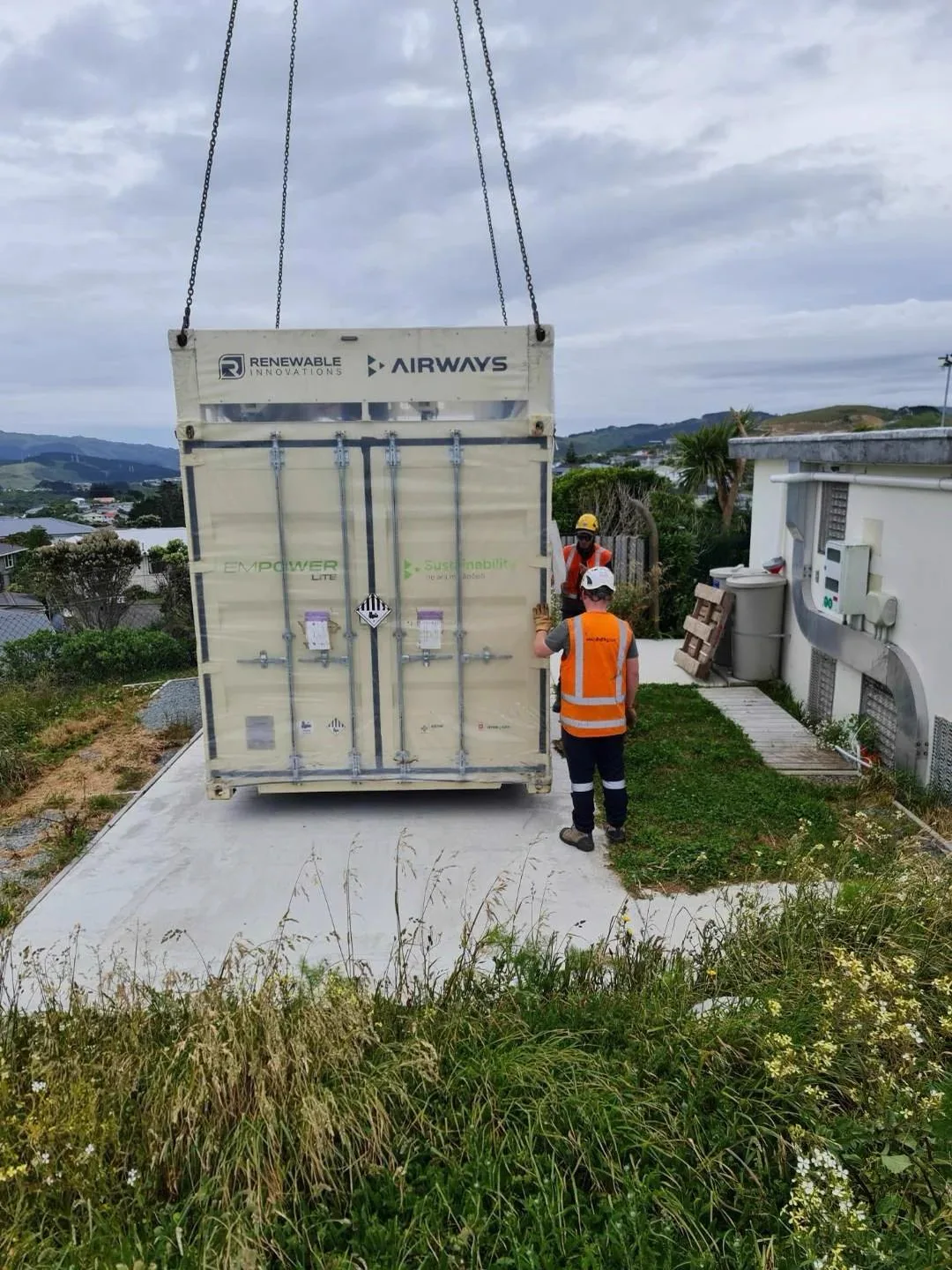
In June 2023, a large New Zealand state-owned enterprise ordered the country's first hydrogen fuel cell UPS backup power system: an EmPower Hydrogen Power Module protecting critical infrastructure at a semi-remote site where diesel had been the only option.
New Zealand's first hydrogen fuel cell UPS
Potential follow-on systems from a successful pilot
Projected value of the follow-on program (company projection)
This is an exciting first to be implementing hydrogen power UPS solutions in New Zealand and other South Pacific countries.
Tell us your loads, your outage tolerance and your duty cycle. We'll engineer the chemistry, size the capacity and, where duration matters, put hydrogen behind it. Monitored around the clock.