The power is made here.
One container holds the whole plant: 500 kg of hydrogen at 700 bar, a fuel cell rated up to 640 kW and a 250+ kWh battery buffer.
8 outlets. No utility upgrade.
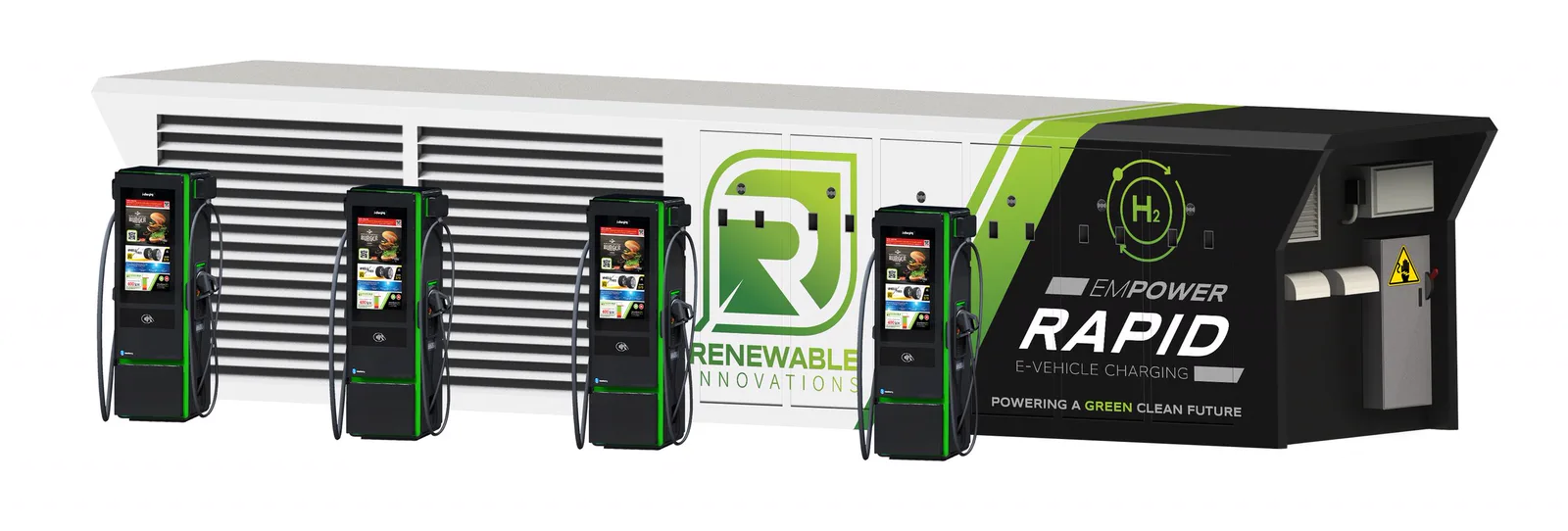
A complete fast-charging plaza in a 40-foot container. A hydrogen fuel cell, a battery buffer and up to eight rapid-charge outlets, installed on a level concrete pad.
One container holds the whole plant: 500 kg of hydrogen at 700 bar, a fuel cell rated up to 640 kW and a 250+ kWh battery buffer.
Four dual-port rapid DC dispensers rated 150–400 kW, wired directly to the container. No switchgear building, no trench back to a substation.
Up to eight outlets serve four vehicles at once. A typical charge takes around 20 minutes, limited by the vehicle, not the plaza.
A row of DC fast chargers is one of the heaviest loads a commercial site can ask for, and the service upgrade to feed it runs on the utility's schedule, not yours.
EV Rapid Charge makes that power on the pad instead. A hydrogen fuel cell generates it, a battery buffer carries the charging surges, and the only site work is a level concrete pad with delivery access.
Set your fleet's daily charging and watch the plaza work. The plan shows a representative layout on a level concrete pad.
Your estimate. It depends on the vehicles and how full they arrive.
Estimate only. Uses figures from this page: four vehicles charging at once, about 20 min per session, a fuel cell up to 640 kW and 500 kg of hydrogen on board. Hydrogen use follows the Rebelle Rally field record, roughly 800 kg for about 12,000 kWh delivered. An engineer sizes the real plaza.
Where utility service exists, the system works alongside it. Hydrogen and the battery buffer supply the rapid-charging load the existing connection was never sized to carry.
Every kilowatt is generated on the pad from delivered hydrogen. Fleet yards, rural corridors and sites the grid hasn't reached get fast charging without waiting for it.
Between charge sessions, the same fuel cell and battery stand behind the host site as a ready-made emergency supply. One asset earning its pad two ways.
| Power | |
|---|---|
| Fuel cell | Up to 640 kW |
| Battery buffer | 250+ kWh |
| Onboard hydrogen | 500 kg at 700 bar |
| Refueling | Hydrogen delivered to site; refill as demand requires |
| Site | |
| Form factor | 40-foot container |
| Site requirements | Level concrete pad with delivery access, no utility upgrades |
| Operating modes | Grid-tie, off-grid, or UPS for the host site |
| Charging | |
| Rapid DC chargers | 4 dual-port stations, 150–400 kW |
| Charge outlets | Up to 8 |
| Simultaneous vehicles | 4 |
| Typical charge | ~20 minutes, limited by the vehicle |
| Commercial | |
| Capital purchase | Own the system outright |
| Renewable Power-as-a-Service | Full plaza for a monthly fee: delivered, fueled and supported |
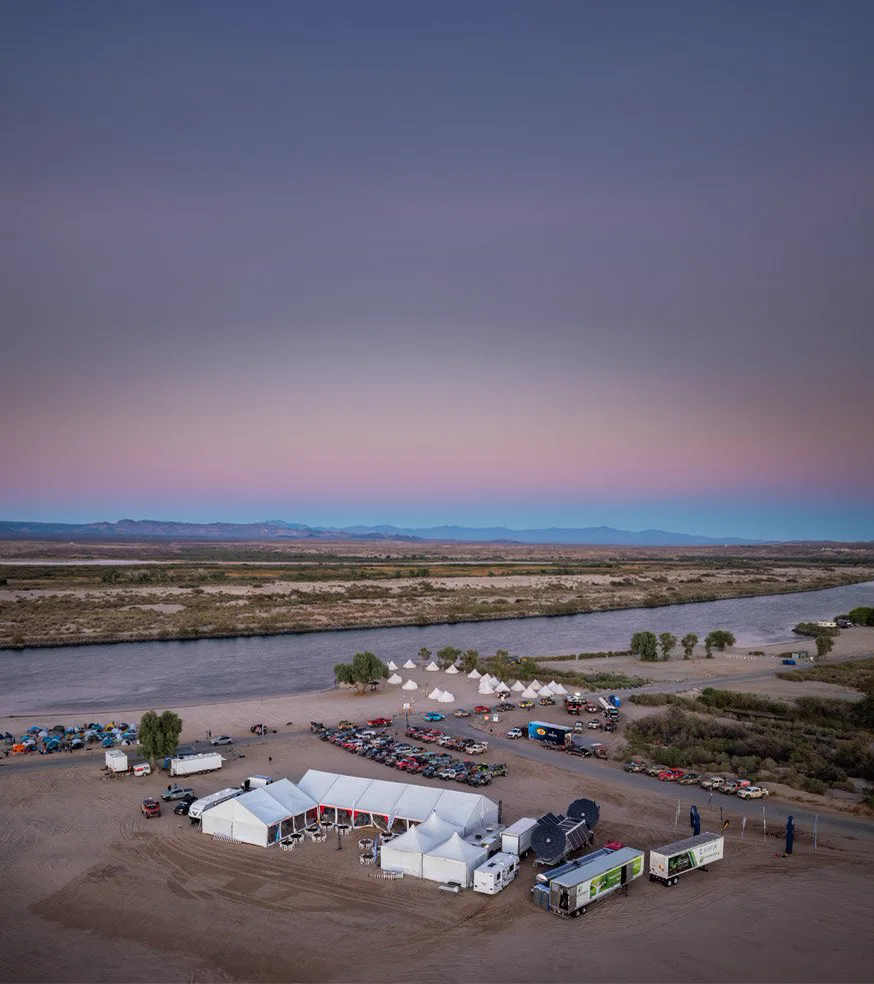
Before it was a stationary plaza, this rapid-charging architecture ran for years on our mobile fleet: in deserts, at race events and in front of the automotive press.
Official power partner since 2021. Across the 2021 to 2023 rallies, roughly 800 kg of hydrogen fed DC fast chargers in the Nevada and California desert, with no grid within reach.
In 2024, four Level 3 rapid chargers and ten Level 2 chargers ran on hydrogen and solar at one of the harshest off-road events in North America.
An RI mobile charging trailer charged 13 EVs during 2022 SUV of the Year testing, and RI charging supported the Performance Vehicle of the Year program.
Through the HYDROTEC partnership, GM and Renewable Innovations announced the goal of deploying hundreds of hydrogen-powered rapid chargers nationwide.
There is no additional utility power required. You will be up and running with up to eight rapid EV charge outlets.
Send us your site plan and traffic profile. We'll lay out the plaza, plan the hydrogen supply, and quote it your way: as a capital purchase or as Renewable Power-as-a-Service for a monthly fee.