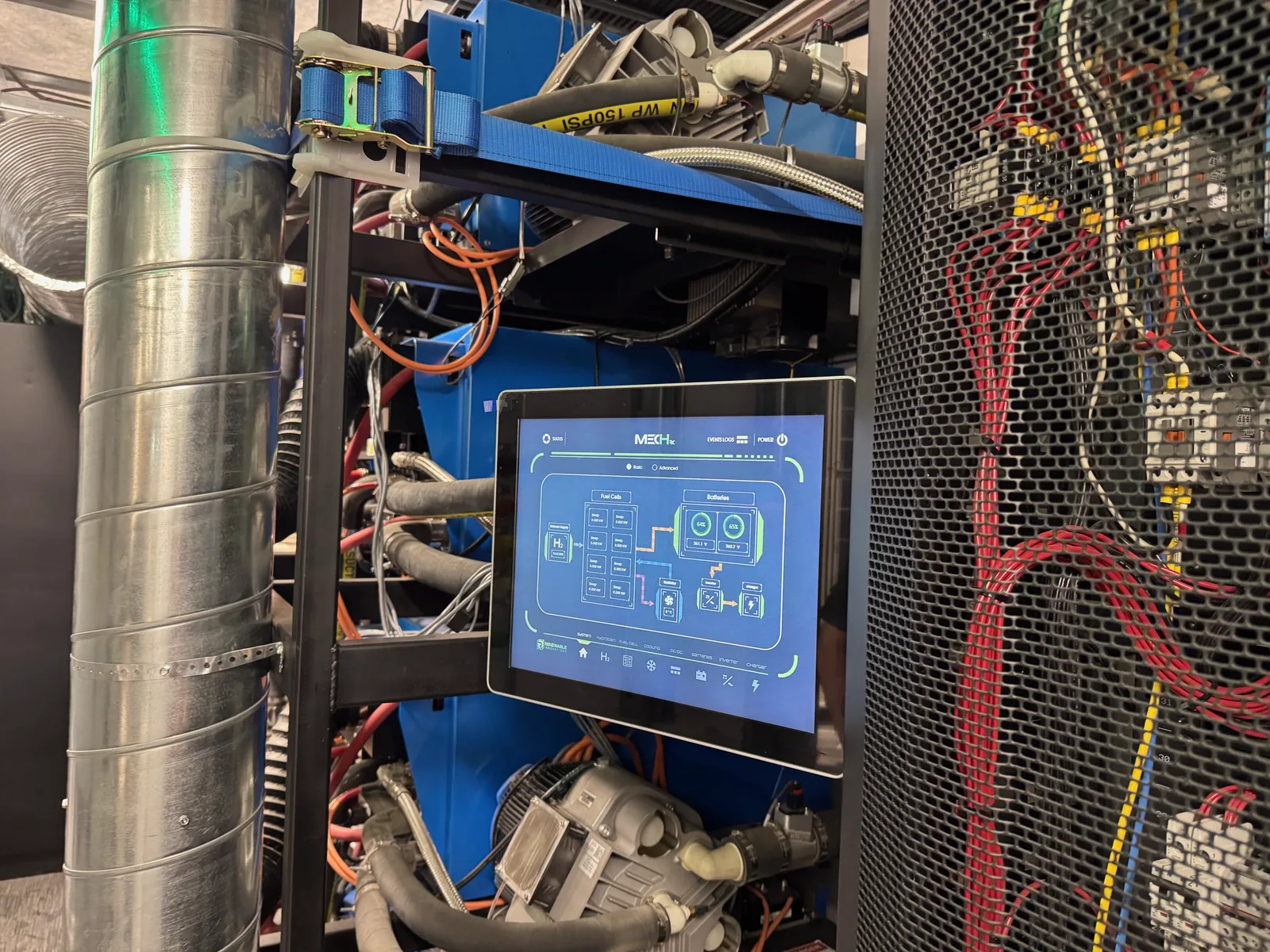
Prime and backup site power
Job sites, events, disaster response, and facilities waiting on a utility interconnect. Three-phase AC at 120/208, 480 or 400–415 Delta, held steady by the battery buffer, and quiet enough for overnight urban operation.
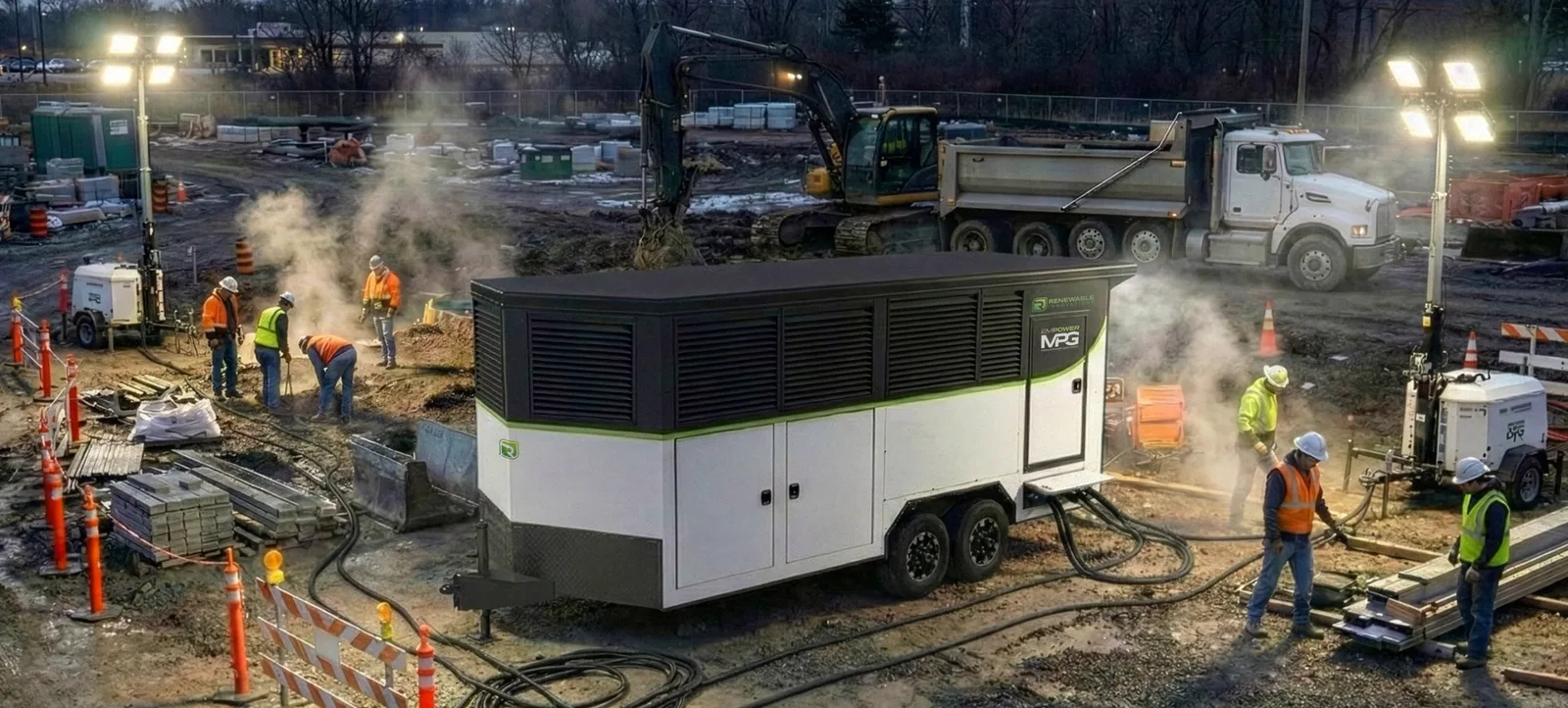
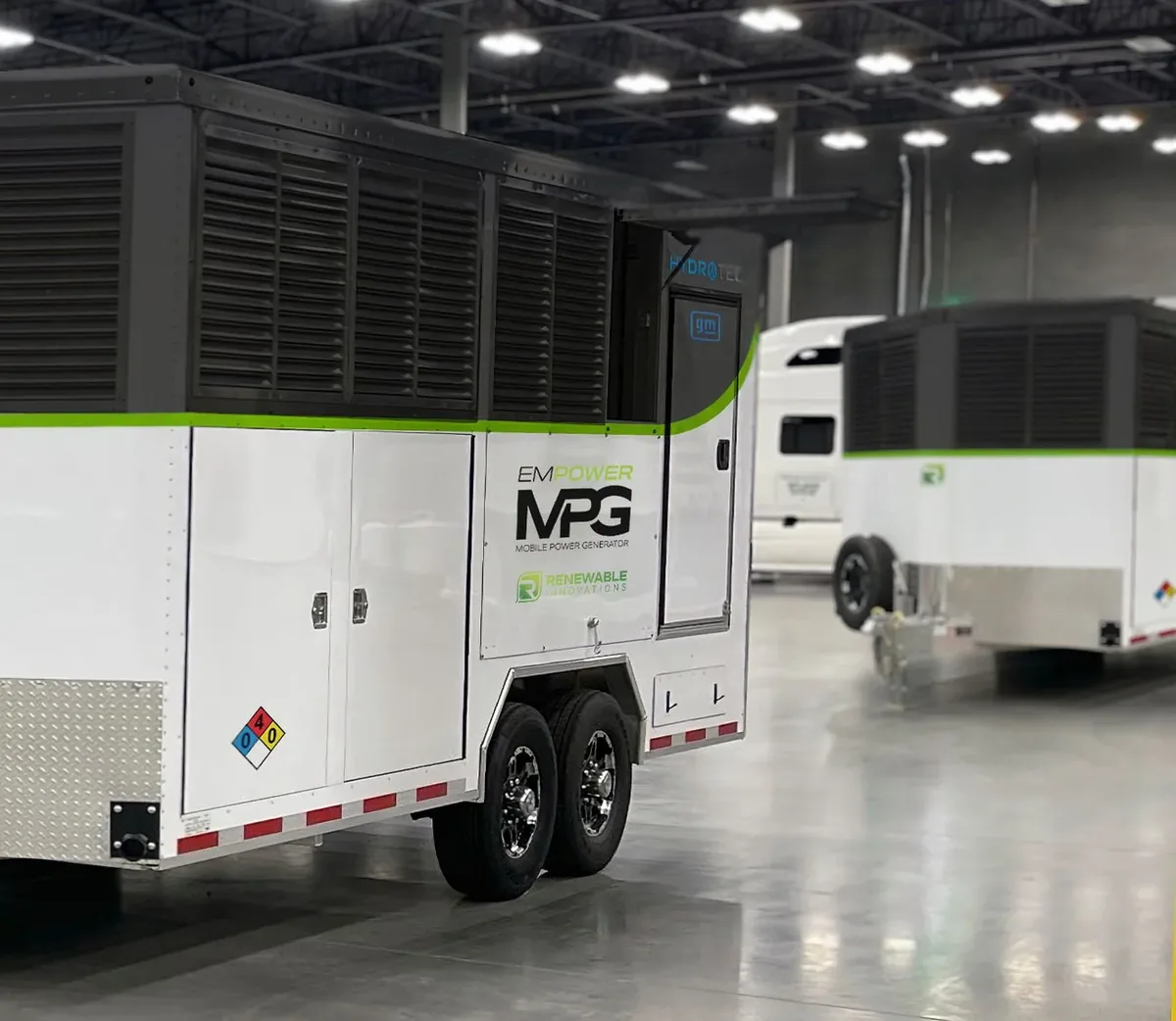
A hydrogen fuel-cell power plant on a trailer. Tow it in with a pickup, connect your loads, and run up to 180 kW of near-silent power with no grid, no diesel and nothing out the exhaust but pure water.
The MPG pairs a GM HYDROTEC fuel cell with a 180 kWh battery buffer, so it holds steady output through load swings that stall conventional generators.
It runs beside a film set, a hospital or a sleeping neighborhood, because the loudest thing on it is the cooling fans and the only exhaust is water.
Six subsystems, one trailer. Pick one to see what it does and the figures behind it.
Every kilogram of hydrogen delivers 12–20 kWh depending on load profile. We size the unit, and the refill schedule, to your actual demand, not a brochure figure.
Job sites, events, disaster response, and facilities waiting on a utility interconnect. Three-phase AC at 120/208, 480 or 400–415 Delta, held steady by the battery buffer, and quiet enough for overnight urban operation.
Optional twin 180 kW DC fast chargers with CCS, CHAdeMO and Tesla connectors charge a vehicle in under 20 minutes, with built-in metering and payment, so a fleet yard or school district can charge where the buses park, not where the grid allows.
| Topic | EmPower MPG | Diesel generator |
|---|---|---|
| Emissions | Pure water. No CO₂ emissions permits required | CO₂, NOx and particulates; permitted and increasingly restricted |
| Noise | Near-silent, low heat signature; runs beside offices, sets and neighborhoods | Engine noise constrains siting and overnight operation |
| Efficiency | Over 50% more efficient as primary or backup power | Baseline; efficiency falls further at partial load |
| Fuel logistics | Hydrogen stores indefinitely without degrading; ~30-minute refills | Diesel degrades in storage and needs polishing, treatment and rotation |
| Load response | 180 kWh battery buffer absorbs surges instantly | Governor lag on step loads; oversizing is the common workaround |
| Fuel cell | 80 kW GM HYDROTEC power cube; optional second cell |
|---|---|
| Total power output | Up to 180 kW |
| Inverter rating | 200 kW |
| Battery | 180 kWh lithium-ion |
| Onboard hydrogen | 40+ kg at 700 bar |
|---|---|
| Hydrogen quality | 99.999% purity |
| Delivered energy | 12–20 kWh per kg |
| Refuel time | ~30 minutes at a vehicle H₂ station |
| Exhaust | Pure water |
| AC output | 120/208, 480 Delta, 400–415 Delta |
|---|
| Rapid DC chargers | 2 × 180 kW, single or double outlet |
|---|---|
| Connectors | CCS, CHAdeMO, Tesla |
| Typical charge | Under 20 minutes |
| Dimensions | 26′3″ × 8′6″ × 9′6″ (8.0 × 2.6 × 2.9 m) |
|---|---|
| Weight | ~13,600 lbs (6,000 kg); tows with a standard pickup |
| Scaling | Multiple units join; family spans 60–600 kW |
| Monitoring | 24/7 remote monitoring from the RI Network Operations Center |
| Metering | Built-in time-logging and payment system |
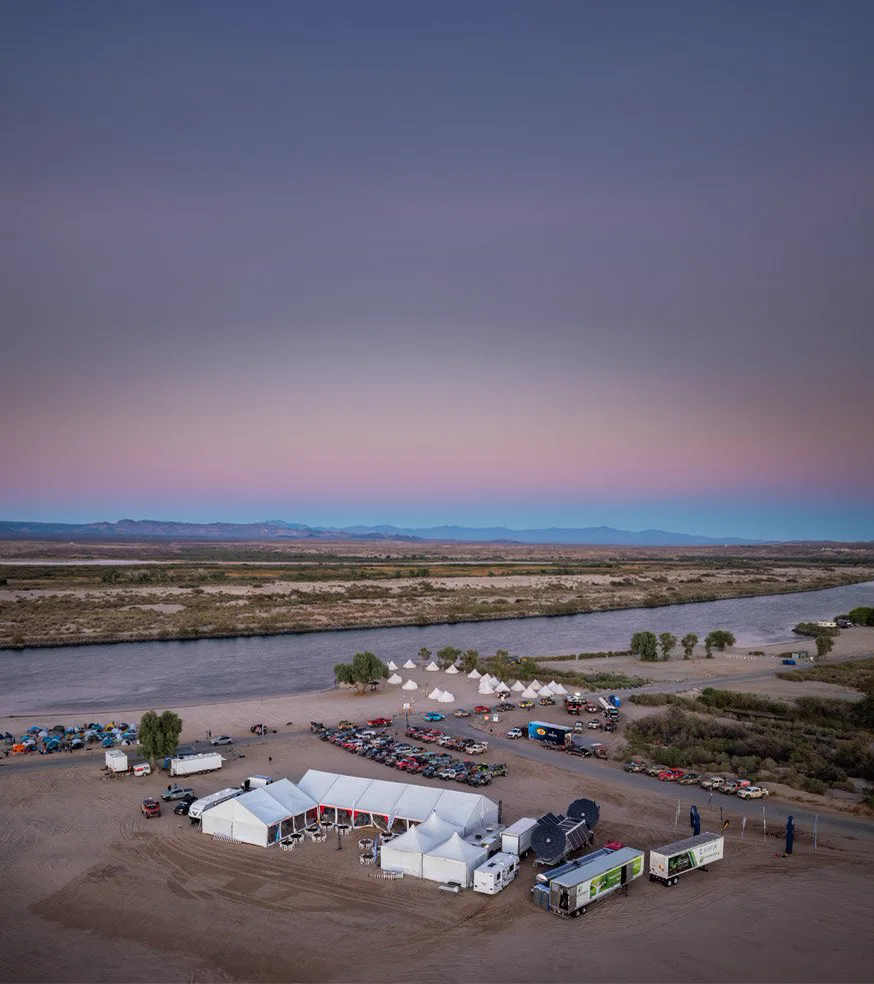
Named official power partner of the Rebelle Rally: grid-free power and EV charging across 2,500 km of Nevada and California desert. The first of five consecutive years.
GM announces the HYDROTEC partnership: RI power integration around GM fuel cells, with the MPG family spanning 60–600 kW. The U.S. Army's DEVCOM evaluates a palletized variant, and purchase orders arrive from Fortune 50 companies.
An MPG is delivered to the U.S. military. EPRI and the California Energy Commission select RI hydrogen trailer hardware for the Oakmont Village community microgrid pilot. At that year's rally, RI systems charge the first EV ever to win it.
RI's mobile fleet runs fourteen chargers on hydrogen and solar at King of the Hammers, demonstrates to law enforcement at the Police Security Expo, and delivers a near-1 MW desert microgrid at the 2025 rally.
“GM will combine its fuel cell hardware and software with Renewable Innovations' power integration and management systems to create a generator that can provide fast-charging capability for EVs.”
Every MPG reports to our Network Operations Center around the clock: output, hydrogen level, battery state and charge sessions. We see a fault before your crew does, and dispatch refuels before the tank runs low.